
Like everyone else, I've been puzzling and soul-searching over this Summer's sudden contagion of riots that turned a selection of England's cities into divided, shell-shocked communities. Theories abound and knees are jerking. I've heard every kind of explanation for the 'cause' of the rioting - from the overly simplistic to the highly nuanced, ranging in scope from the laughably racist to anti-capitalist rants, to popstars pointing the finger at the desensitising effects of dystopian computer games. What is clear, however, is that society is newly afraid of its children. Listen as this woman, in a soundbyte that was played over and over in the aftermath of the London riots, compares the mob that vandalised her property to 'feral rats'.
This woman has my sympathy. She's furious, bewildered and her sounding off makes great television, but the demonisation of youth is hardly new. We have always been afraid of our children.
Consider Marlon Brando as The Wild One (1953) or James Dean as The Rebel Without A Cause (1955) - both of whom scared the bejesus out of nice, clean-living folk, with their motorbikes, leather jackets and surly disregard for the mores and manners of their parents' generation and so seemed to augur the end of civil, consensual society. Fashion has its role, as particular apparel and appearance become popularised synonyms for menace; the leather jacket of the motorcycle gang, the dandyism of the Teddy boys with their coshes, chains and razors, the boots and braces and naked scalp of the skinhead - and now the hoodie.
The 'hooded top' has become the signifier of incipient criminality because it effaces identity so swiftly, concealing faces behind masks of shadow. The hoodie was a symbol for a particular kind of urbanised pack-mentality and city-dwelling underclass long before the riots of Summer 2011 (remember this?), but the coverage of recent events have returned it to the top of the list of clothing 'most likely to inspire fear and loathing' in the middle classes. You need only look at the ominous poster for the excellent 2006 French horror film, Them (original French title, Ils), directed by David Moreau and Xavier Palud, to see how the hoodie can be simply used to evoke apprehension and dread. At risk of spoiling the film's third act reveal, Them is an indiluted exercise in 'Hoodie Horror'. It's raw, unrelenting and cruel, and the violence inflicted on its two adult leads - a young teacher and her lover - is never explained, justified or given satisfying motive. The final scene of the film is chilling and may leave you with an immovable distrust of children-at-play.

As I watched the coverage of burning cars, broken windows and 'January Sales-with-violence', it was easy to arrive at a thoroughly dystopian view of The City and despair too at the failings of urban planning. With all the associated discussion of the role of the 'sink estates' - considered by many to be petri dishes for criminality - I was reminded of Chris Shepherd's short film, Dad's Dead (2003). Shepherd's film, which mixes life-action with animation to disturbing effect, is another example of 'hoodie horror', and sets its story against a backdrop of social deprivation and neglect - the sink estate as adventure playground from hell and its law-abiding residents as playthings.
My reason for writing this post is I've just watched Eden Lake, the 2008 British horror film from director, James Watkins. Eden Lake shocked me. Eden Lake impressed me. Eden Lake made me think all over again about the UK riots, about the facts and fictions of 'feral youth' and about the twisty, python-pit of causes lurking beneath the question, 'Who is to blame?'. Watch it. Watch it today, but be warned; it is a far from easy or pleasurable experience. As Peter Bradshaw writes in The Guardian: "Seriously bloody horrible in every particular, and uncompromisingly bleak to the very end, this looks to me like the best British horror film in years: nasty, scary and tight as a drum. It is a violent ordeal nightmare that brutally withholds the longed-for redemptions and third-act revenges, offering only a nihilist scream and a vicious satirical twist in our perceived social wounds: knife-crime, gangs and the fear of a broken society." (Bradshaw, 2008)

A quick view of the trailer will give you the essentials of the plot - such as it is: a nice, middle class couple travel out to the secluded titular beauty spot for some rest and relaxation and a proposal of marriage, where they encounter a rag-tag gang of children who seem intent on ruining their weekend. Things soon escalate with a horrible, inescapable momentum and the film, like its characters, descends quickly - brutally - into survival horror hell.
And yet, for all its bone-crunching brutality, Eden Lake is clever, because it is nuanced, because it gives every one of its characters - however objectionable (and they are objectionable) - just enough humanity to inhibit our desire to demonise or talk easily or confidently in terms of 'good and evil'.
Again, as Bradshaw observes, "I was reminded of something that the late Alexander Walker, film critic of the London Evening Standard, once wrote about Kubrick's Clockwork Orange: we hate and fear our children - because they are going to kill us. Eden Lake has the same idea. The confrontation here isn't about race and not even exclusively about class; it's not about townies and hillbillies, or blacks and whites, or yuppies and chavs. At bottom, it's about older people and the young: a gang of feral children who are as powerful as adults. They instinctively exploit the indulgences and prerogatives extended to them as children, having semi-comprehendingly imbibed a sense of resentment and entitlement from their own elders." (Bradshaw, 2008)
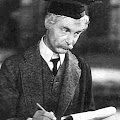
Eden Lake is the closest thing I've found to a satisfactory 'explanation' for our 'inexplicable' summer of unrest. It satisfies because it lays bare our innate distrust of our children. It satisfies because it provokes indignation and fury; because it gives the audience its 'feral rats!' moment, because is appeals to the latent vigilante in all of us, who 'won't stand for it' and desires an eye for an eye. Eden Lake satisfies because, despite the awfulness of its violence and the depravity of its characters, it is a moral film, in so much as it tells us something truthful about the human cost of savagery and revenge, and in this respect, the film serves as a cautionary tale. Eden Lake satisfies because, in its final coda, the film asks uncomfortable questions about our role models, about family, about the responsibilities that one generation has for another, and how it is possible for the world of adults to fail its children. I'm reminded of - and will conclude with - the oft-quoted Philip Larkin poem, This Be The Verse (1971):
They fuck you up, your mum and dad.
They may not mean to, but they do.
They fill you with the faults they had
And add some extra, just for you.
But they were fucked up in their turn
By fools in old-style hats and coats,
Who half the time were soppy-stern
And half at one another’s throats.
Man hands on misery to man.
It deepens like a coastal shelf.
Get out as early as you can,
And don’t have any kids yourself.
Comments
Post a Comment